Build It and They Will Come
:A Report on the Melt the ICE Minnesota Week of Action


From February 25 to March 1, aspiring revolutionaries in the Twin Cities hosted hundreds of people who traveled to Minnesota to take part in the Melt the ICE week of action. Multiple events took place every day, including marches, blockades, noise demos, speaking events, and trainings. These actions and workshops served both to bolster the resistance against Immigration and Customs Enforcement agents in Minnesota and to teach activists from all over the country how to export the Twin Cities’ rapid response model to their hometowns.
In this report, organizers reflect on the week of action and draw out lessons for the movement as a whole.
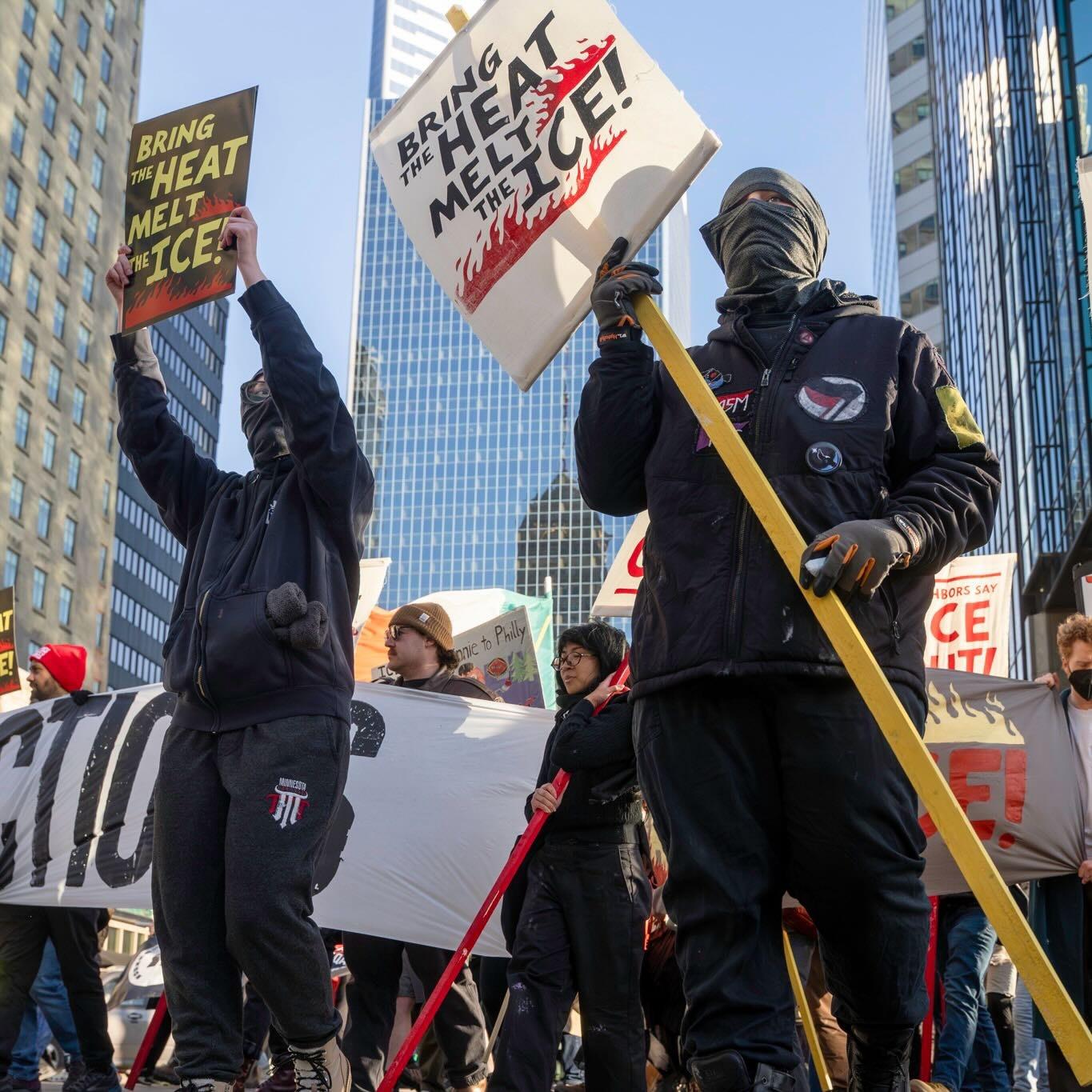
February 27, 2026.
For three months, Minnesotans have supported our friends, family, and neighbors who shelter in place and face the constant threat of kidnapping at the hands of federal agents. We have experienced daily encounters with tear gas, high-speed car chases, and the threat of deadly violence. At the same time, we witnessed a dizzying flurry of analyses about why our resistance was so strong and robust. Where could this moment take us?
Yet less than two weeks after the murder of Alex Pretti, we began to lose momentum. The international uproar following Pretti’s death forced the Trump regime to make concessions, changing tactics in Minnesota and firing Greg Bovino, the so-called “commander-at-large” of US Customs and Border Protection and the public face of Operation Metro Surge. These concessions were designed to take the wind out of the sails of the resistance—and to some degree, they worked.
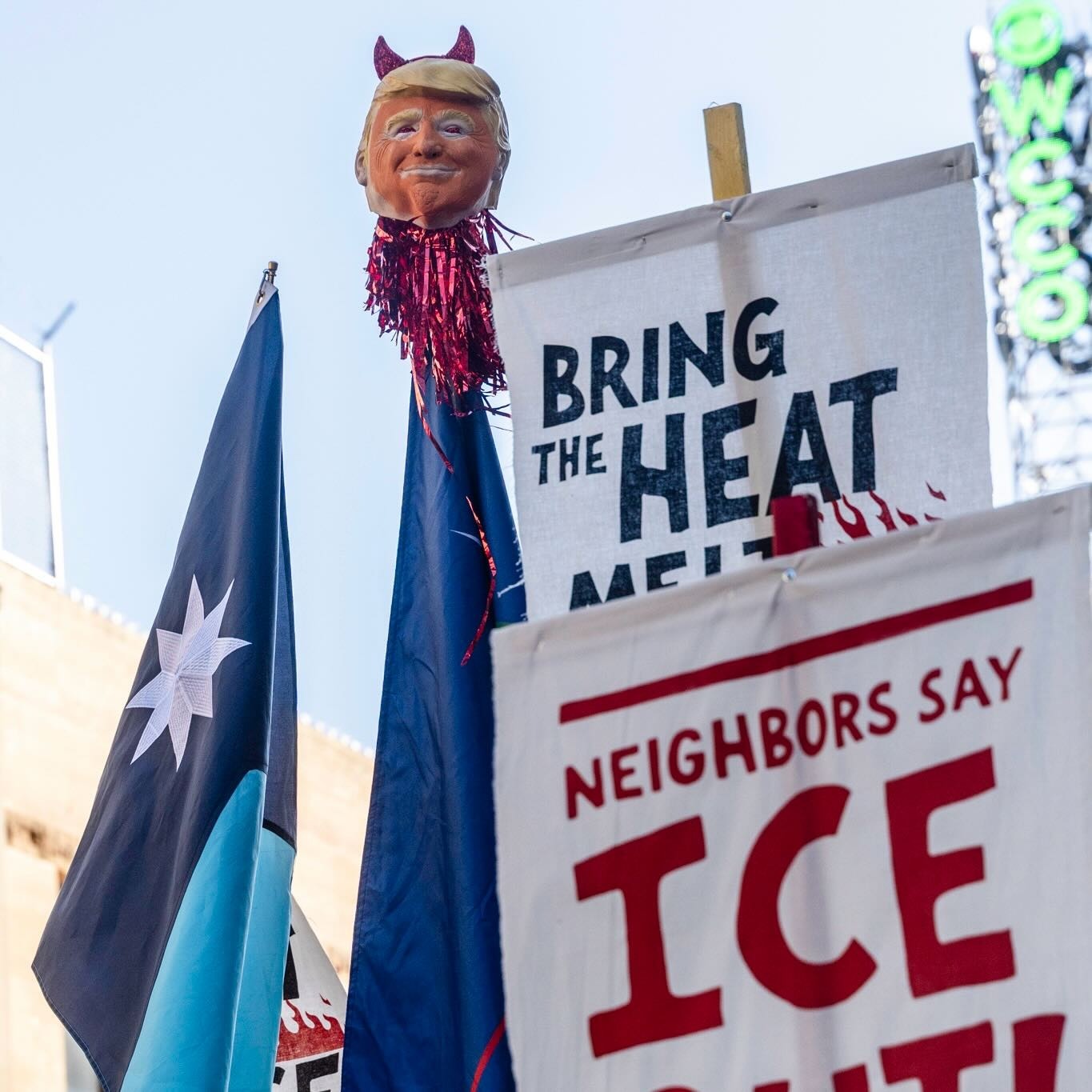
February 27, 2026.
This was only possible because our movement lacked a political horizon beyond “ICE out.” While everyday militancy and care had blossomed around the common goals of defeating ICE and supporting our neighbors, there was less momentum around demands to free the same neighbors from the concentration camps where they are now held.
One of our comrades had the idea to organize a week of action to share the tactics at the heart of our resistance movement and to continue to build towards revolutionary struggle. It instantly made sense. Since the murder of Renee Good, we had been hearing from comrades across the country that they wanted a way to come here and plug in. And we were nowhere near ready to let go of the revolutionary potential of this moment in the Twin Cities.
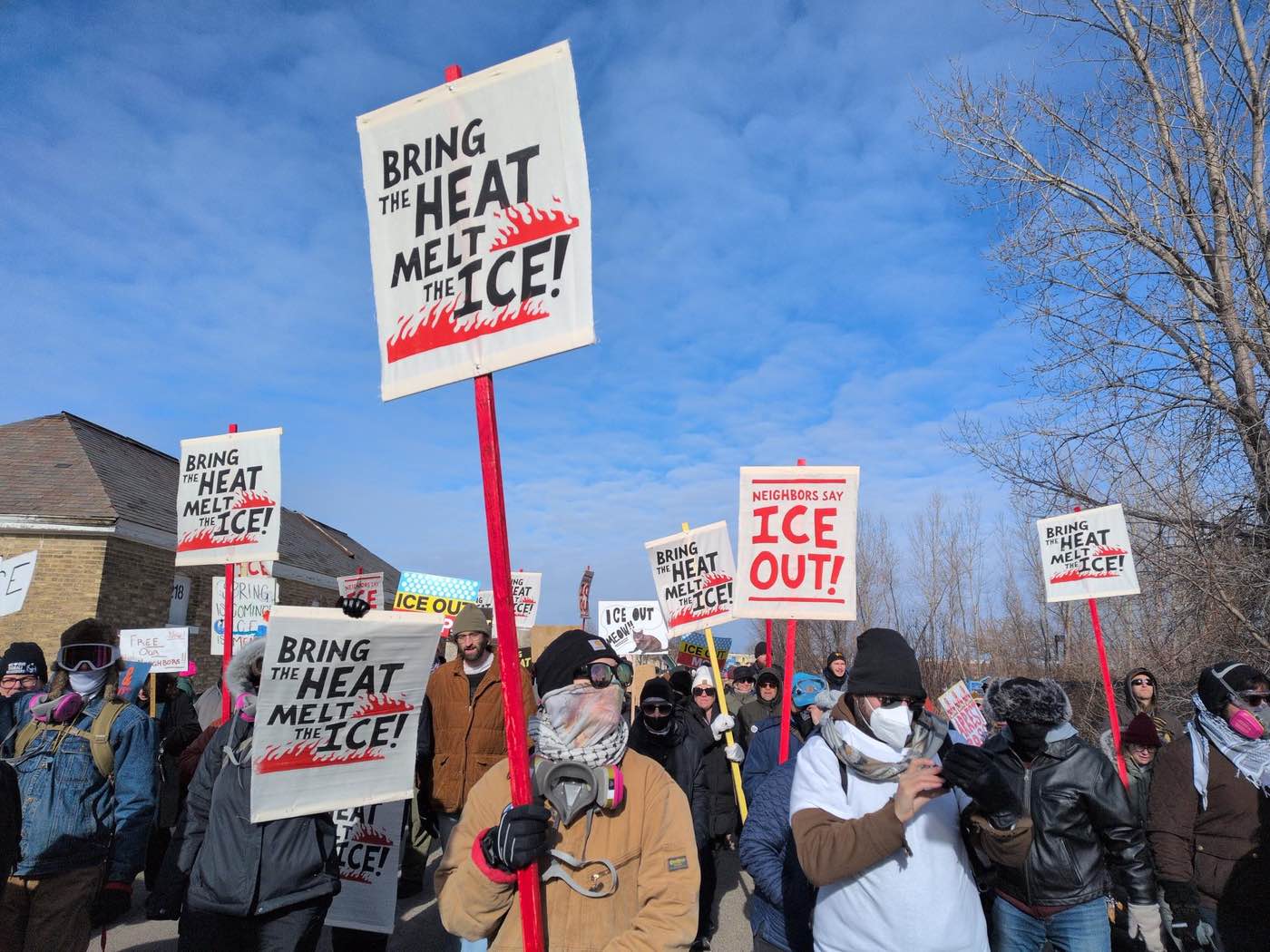
March 1, 2026.
What We Hoped to Do
As aspiring revolutionaries living in the Twin Cities, by late February 2026, we were swinging back and forth between contradicting perceptions of reality. From one perspective, we were triumphant: we had driven out a fascist paramilitary force bent on kidnapping innocent people. Alongside our neighbors, we had demonstrated that we would not tolerate authoritarianism in our cities. From another perspective, it didn’t feel like we had won at all. Thousands of Minnesotans had been captured, at least three had died at the hands of ICE, and most of the abductees were stuck in concentration camps across the country awaiting an unknown fate in horrific conditions. We had thwarted many abductions, but we were still witnessing more.
With the exceptions of the rebellion in North Minneapolis after ICE shot Julio Sosa-Celis on January 14, and the autonomous zones that the people briefly established around the sites where Renee Good and Alex Pretti were murdered, we had seen few instances of prolonged confrontation with the state. Even the mass mobilization day of “No Work, No School, No Shopping” (which union reps, bound by law, could not even call a “strike”) brought us little closer to direct conflict with ICE and its collaborators. Despite the historic participation of more than 300,000 people, the logic and power of a general strike was so obfuscated that, when some groups pressed for another strike on January 30 a week after the first one, volunteers who had been asked to spread the word to small businesses reported, “They don’t want to close again because of profit loss—is there any way we could offer financial support?”
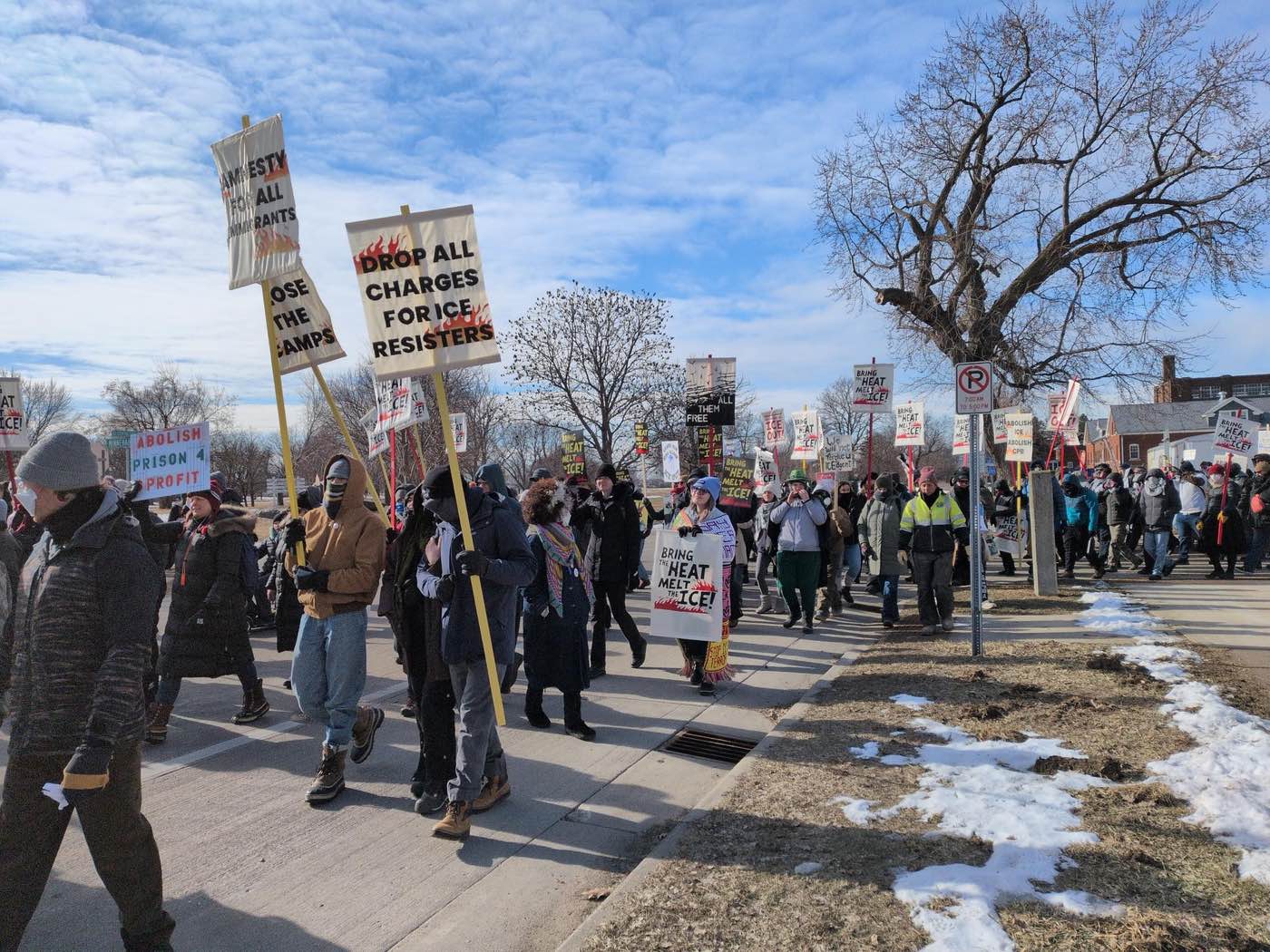
March 1, 2026.
The questions pressed on us: how could we push this movement towards revolutionary struggle, sharpen our collective analysis, and ensure that this moment that had been consuming our daily lives did not end in citywide burnout?
Previous experiences had taught us the potential of bringing people together from across the country to build resistance. These included mass calls to action to Stop Cop City, the Treaty People Gathering mobilization in northern Minnesota during the construction of the Line 3 pipeline, and the legacy of summit-hopping in the early 2000s. The relationships we forged at these mobilizations have shaped our movements. Many of our closest friendships emerged from these.
We decided to give it another shot. We hoped that if we built enough energy, the next time that ICE planned a large-scale operation anywhere in the country, this same convergence could take place again.
So, yes, if ICE comes to your city, we will bring the heat to you.
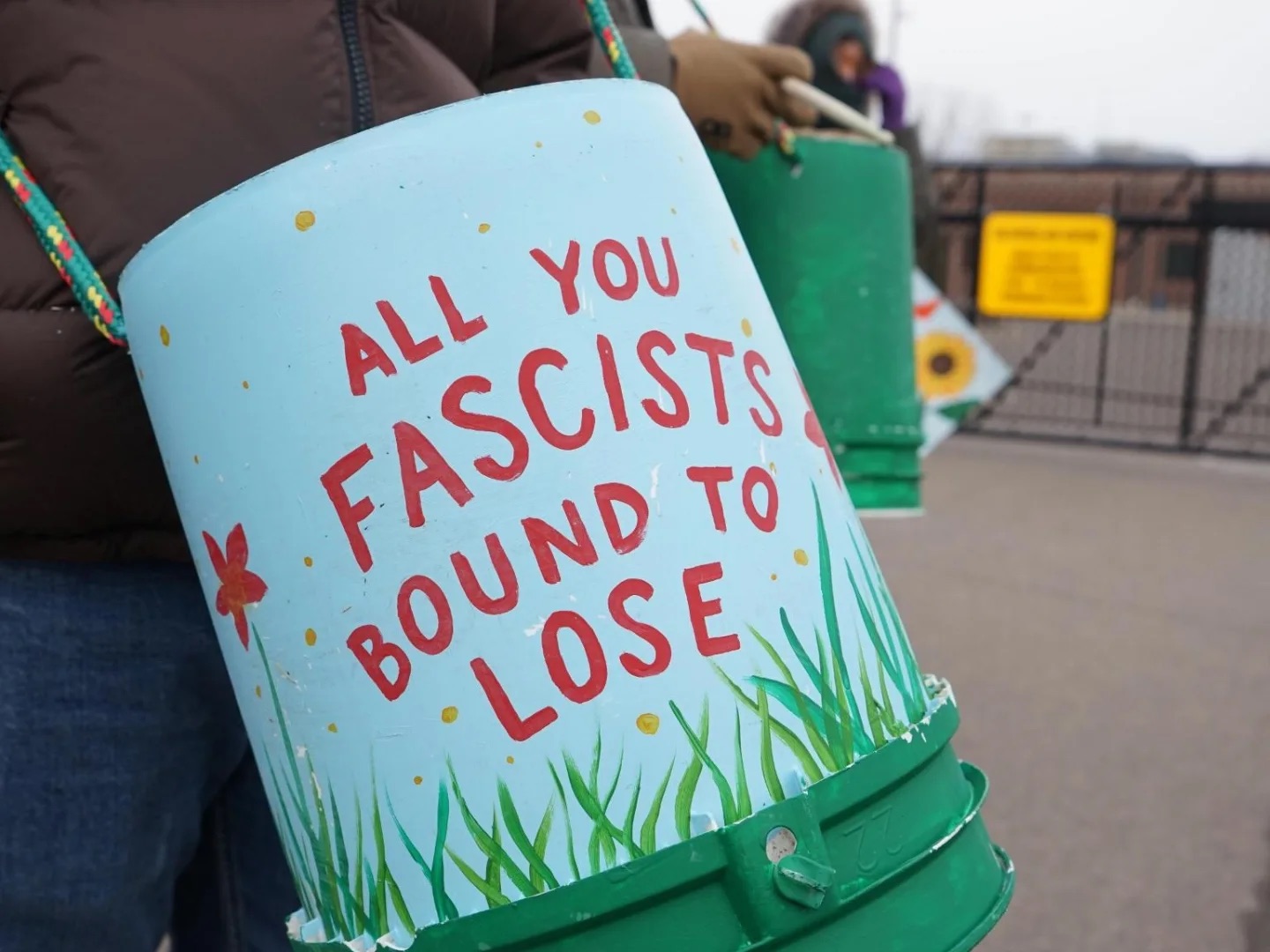
February 28, 2026.
As we spread the idea of the week of action, local organizers were excited despite sedimentary layers of burnout. The initial discussions confirmed that this event would reach across tendencies. Activists and organizations across the state agreed to our long-term goals of abolishing ICE, the Department of Homeland Security, police, and prisons. This unity stems from the George Floyd uprisings, where police abolition became a mainstream value in Minnesota. Now, even nonprofits can be pushed to sign on to the goal of abolition.
This demand did alienate some groups, which did not sign on. But we had more than enough collaborators. One of the mistakes of the Trump administration has been giving us something we can all work on together.
As the week of action began to take shape, we knew that we wanted to center the tactics that we believe are most likely to continue to erode state power. The most important of these is the rapid response networks, which have been so central in disrupting ICE operations. We wanted to get as many people on the streets practicing rapid response as possible, both to give new people firsthand practice and to bolster the numbers on the streets during what the authorities claimed were the final days of the occupation. This is the part of the movement that brings people into direct confrontation with ICE and the state.
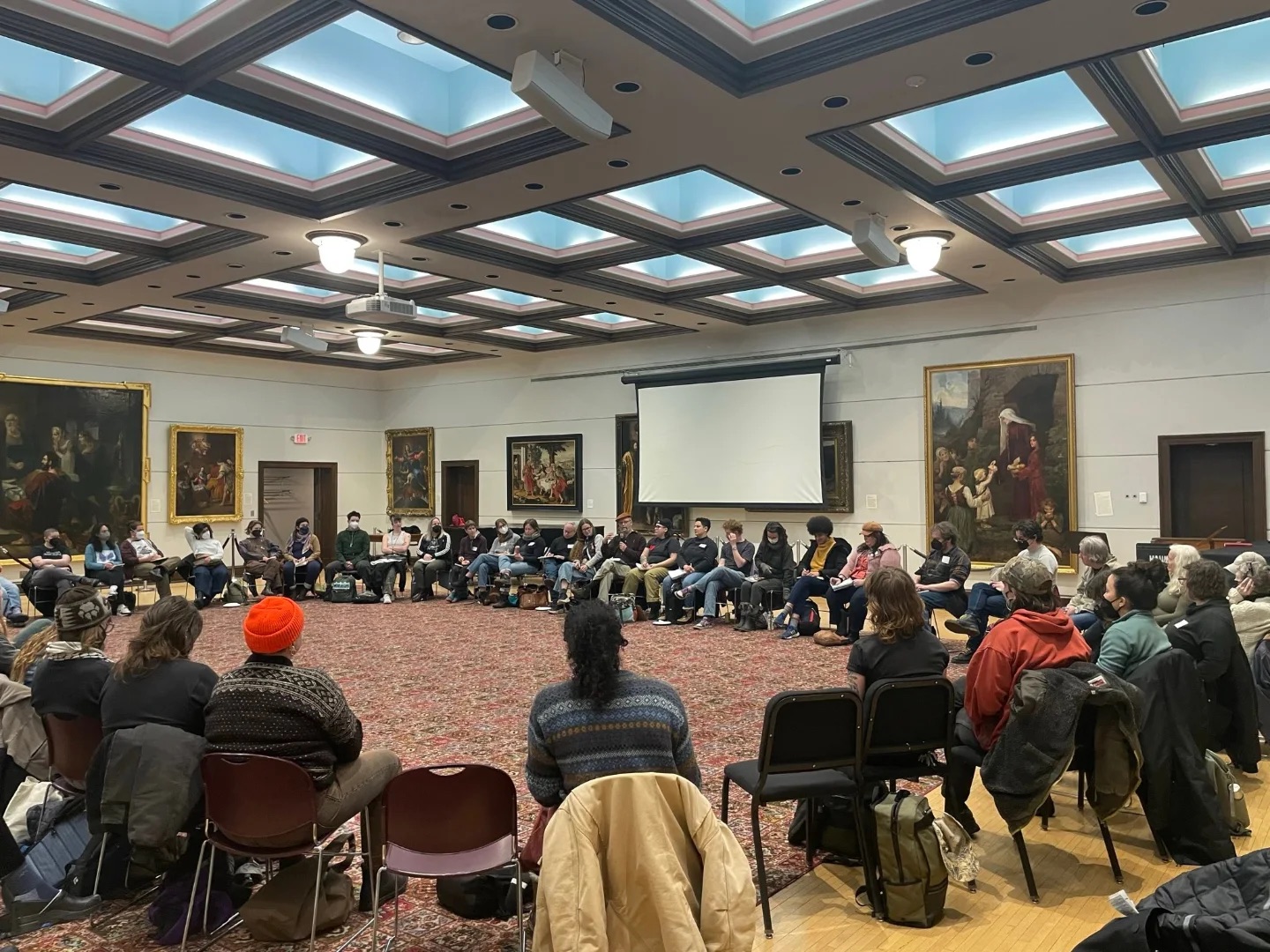
A meeting space on February 26, 2026.
We also conceived of the week of action as a means of drawing attention to “secondary targets,” corporate and government ICE collaborators that prop up the deportation machine.
One example of a secondary target is the predatory housing system. We knew that starting in the first week of March, many vulnerable people who had been unable to work during Operation Metro Surge would begin to face eviction. Local tenant organizers had begun calling for an eviction moratorium in January. In February, they began leveraging a call for a rent strike in defense of families facing eviction. This was a form of practical solidarity with our undocumented neighbors and a move towards flexing economic power not seen in the US for decades.
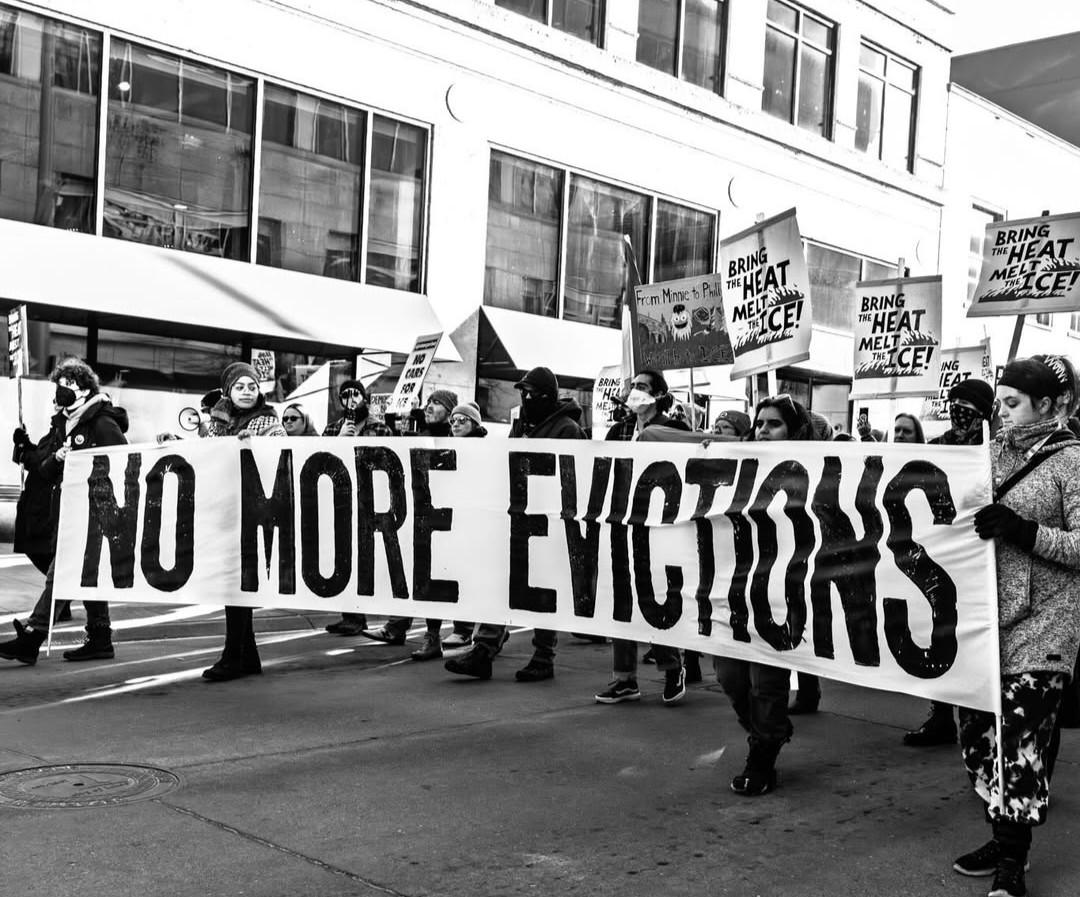
Similarly, we wanted to exert economic leverage on a variety of other entities that facilitate federal operations—including Hilton and various other hotel chains that contract with ICE, companies like Enterprise Rent-a-Car that provide them with vehicles, and corporations like Target and Home Depot that allow them to stage on their property at the expense of vulnerable employees. We also called for people to organize to make their workplaces as hostile to and noncompliant with ICE as possible. Nurses and other hospital workers led the charge in this arena, especially at locations that had experienced ICE attacks, such as Hennepin County Medical Center.
In preparation for the week of action, we built out our working groups and got a website online. There has been extensive coverage of Operation Metro Surge—endless content flooding social media feeds, local news cycles dominated by various related stories, daily spots in national and global outlets. We created materials that we hoped could attract attention in this barrage, flooded the channels of our existing networks, and waited for RSVPs.
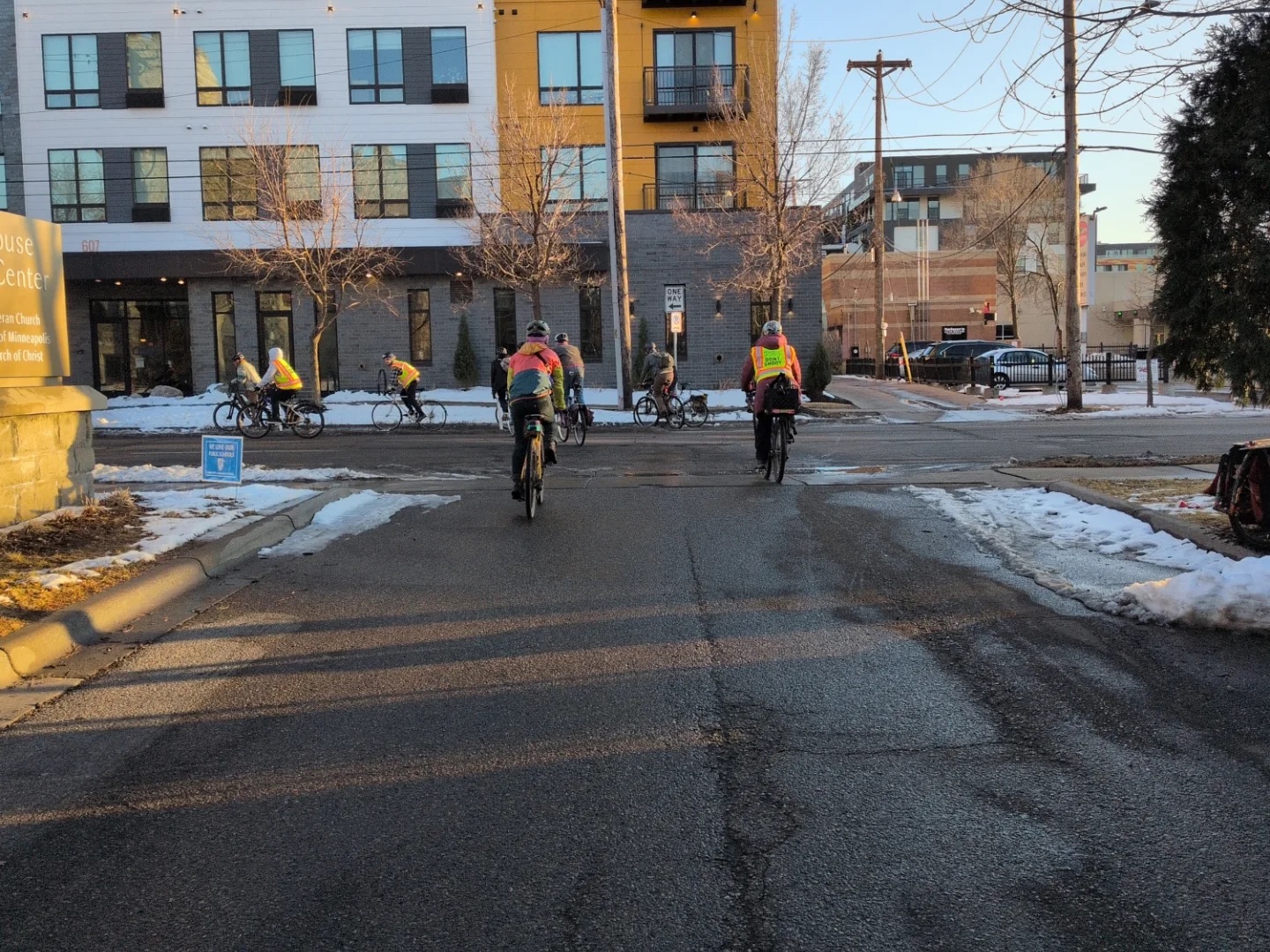
A bike patrol training on February 26, 2026.
The idea for the week of action had emerged in the final days of January; the working groups did not come together until the second week of February. By the time our RSVP form was live, the opening night of this production was only two weeks away. This tight timeline was responsible for many of our efforts’ shortcomings. Had we started a few days later, it might have been impossible to organize a week of action altogether.
One consequence of this short turnaround time was that the week of action self-selected participants for whom it was possible to leave home for several days on short notice, with no financial assistance for transportation. Although we were able to provide communal meals every day from February 24 to March 1, and we owe a debt of gratitude to locals who opened their homes to strangers so that we could house everyone who requested it, this event was still primarily accessible to white, middle-class participants.
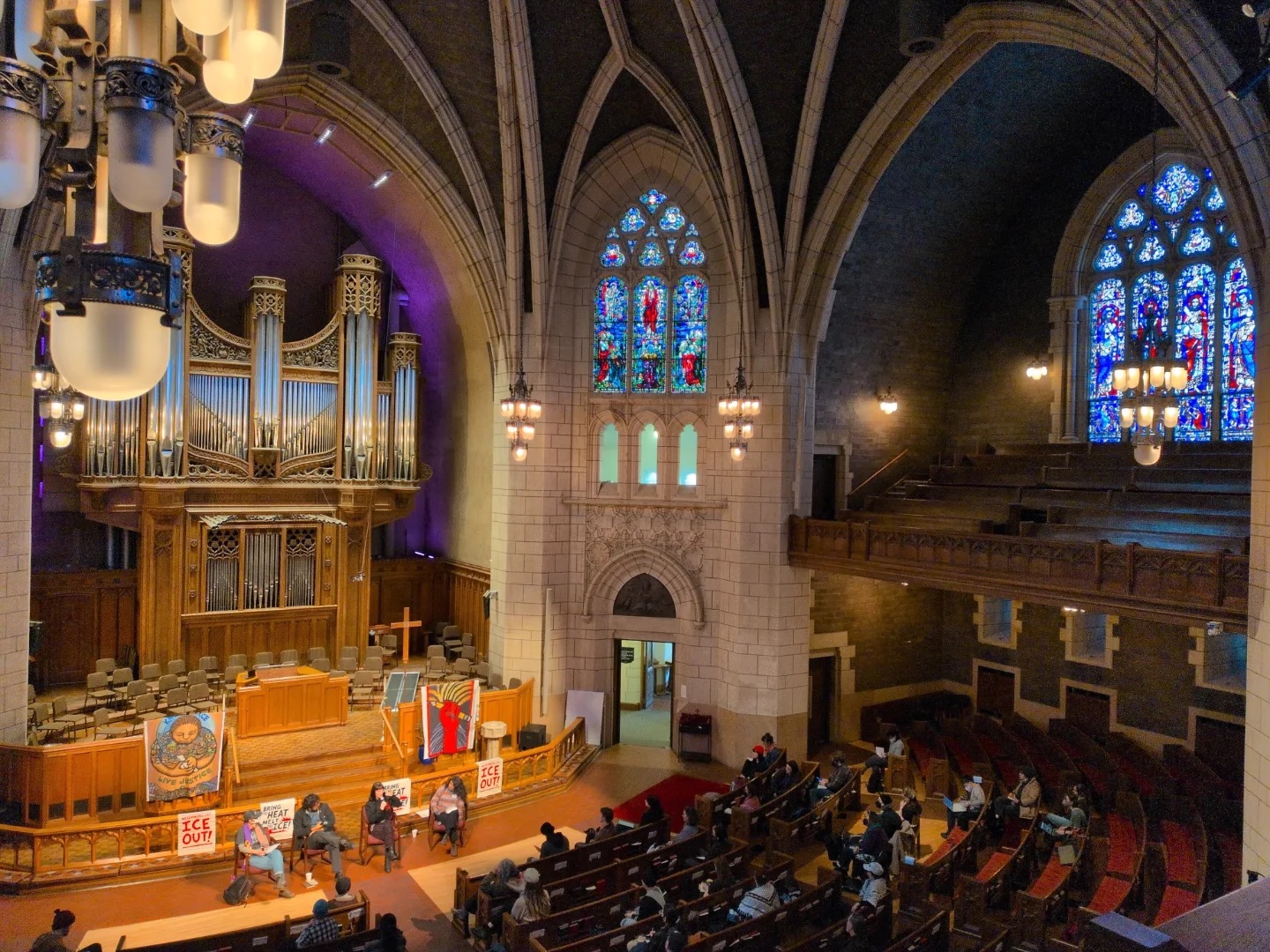
A meeting at a church on February 26, 2026.
We were grateful for feedback from a participant who pointed out a related dynamic: our events had a lack of intentional gathering space for immigrants and people of color. Community and connection are the factors that keep people grounded in movements. We could have done more to develop a collective sense of belonging.
We do not blame these problems solely on the tight timeline. This phenomenon is a core dynamic of the movement itself, and speaks to a complex question of how to craft an interracial and intercultural movement. The overlapping cultures of white activists, the middle class, and neighborhood leaders in rapid response channels exist in profound separation from their Black and brown counterparts, who are fiercely organizing to defend their own communities. There are many reasons for this separation. Many of our neighbors of color are so vulnerable that they are sheltering in place. Many more are immobilized by poverty conditions, or do not trust white organizers who come to them with pre-formed agendas. Thus far, our failures to build a truly multiracial movement continue to hinder our effectiveness. The so-called drawdown has revealed the character of this movement: ICE is still operating, but because they are no longer so visible on the streets, where they will be directly witnessed by white people, participation in the resistance has declined.
How can we carry this movement forward, broaden its scope, and move beyond moderation?
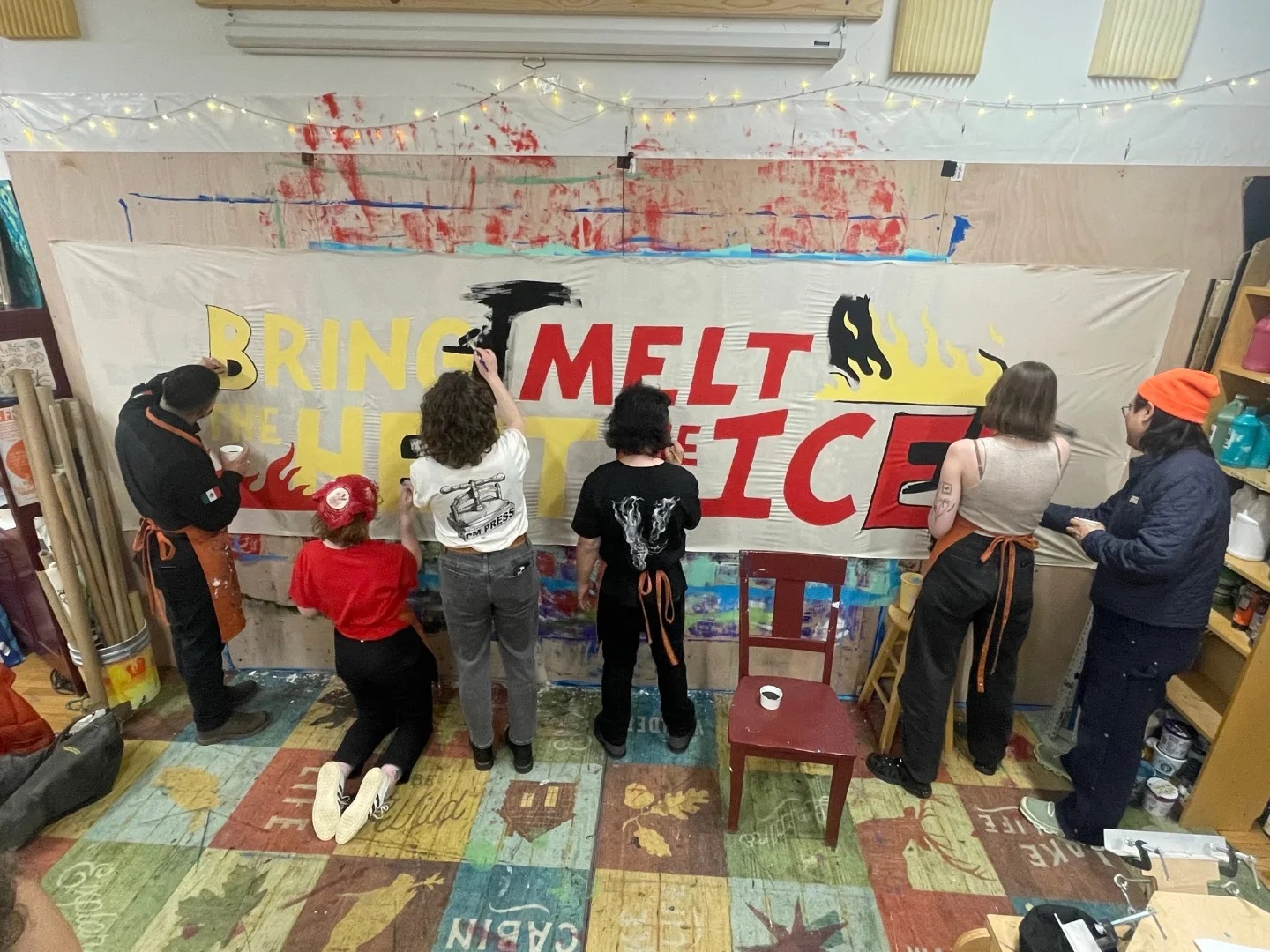
An art build on February 26, 2026.
The Week of Action
Political education is crucial to fostering the strength, militancy, and collective analysis of our movements. As part of the week of action, we put on several dozen training sessions on Wednesday, Thursday, and Friday. These included tutorials on how to set up rapid response networks, skillshares about basic first aid for chemical weapons, a discussion of the impact of the 2020 George Floyd uprising, presentations by teachers and parents on school patrols and school-based mutual aid networks, a panel on ICE resistance in other cities, and much more.
In preparing these sessions, we emphasized the principles of popular education: including room for input, cultivating participant-generated discussion, and teaching through contradictions. We did this for the benefit of the facilitators as much as the participants. We knew that active reflection on our tactics through teaching would reveal as much to us as it did to those who came to learn.
To our surprise, many people offered sessions freely, without being asked. The closer we got to the event, the more ideas began to flow about what we should discuss and how. The memorial stewards of the sites of the murders of George Floyd, Renee Good, and Alex Pretti offered to present a session. For every political education session we offered, there were dozens more we wanted to offer, and thousands more people we wish had heard them.
Another core component of the week of action was inviting participants into local rapid response systems. After attending sessions that detailed the function of rapid response systems and best practices for responding to ICE, we gave attendees the choice to participate in “commuting” (patrolling in cars) and patrolling on foot. The stewards of local rapid response networks, which operate on a geographical basis, designed systems for integrating hundreds of out-of-towners. Patrollers from various neighborhoods trained well over a hundred participants. We took them on “ridealongs” in our neighborhoods following typical patrolling routes, hosted foot and bike patrolling sessions, and ran dispatch for a Signal call for people who followed ICE vehicles as they left the Whipple Federal Building.
Throughout the week, many participants voiced concerns that local rapid response systems would prove unique to the Twin Cities context and be difficult to replicate elsewhere. Despite these reservations, they began to strategize creatively about how they might adjust rapid response structures to account for differences in demographics and the relative size of their cities. There was very little ICE activity reported that week in Minneapolis and Saint Paul themselves, but consistent reports came in from the suburbs, exurbs, and rural Minnesota.
Some comrades speculate that ICE operations have moved away from the Twin Cities metro area due to the organizing here. Suburban and rural areas present different geographical and political challenges to rapid responders, but it would be wrong to say they are not organized. Neighborhoods within the metro area are increasingly partnering with suburbs and rural areas to bolster capacity and coordination. Out-of-town participants found this inspiring when thinking of ways to build rapid response networks in their home contexts.
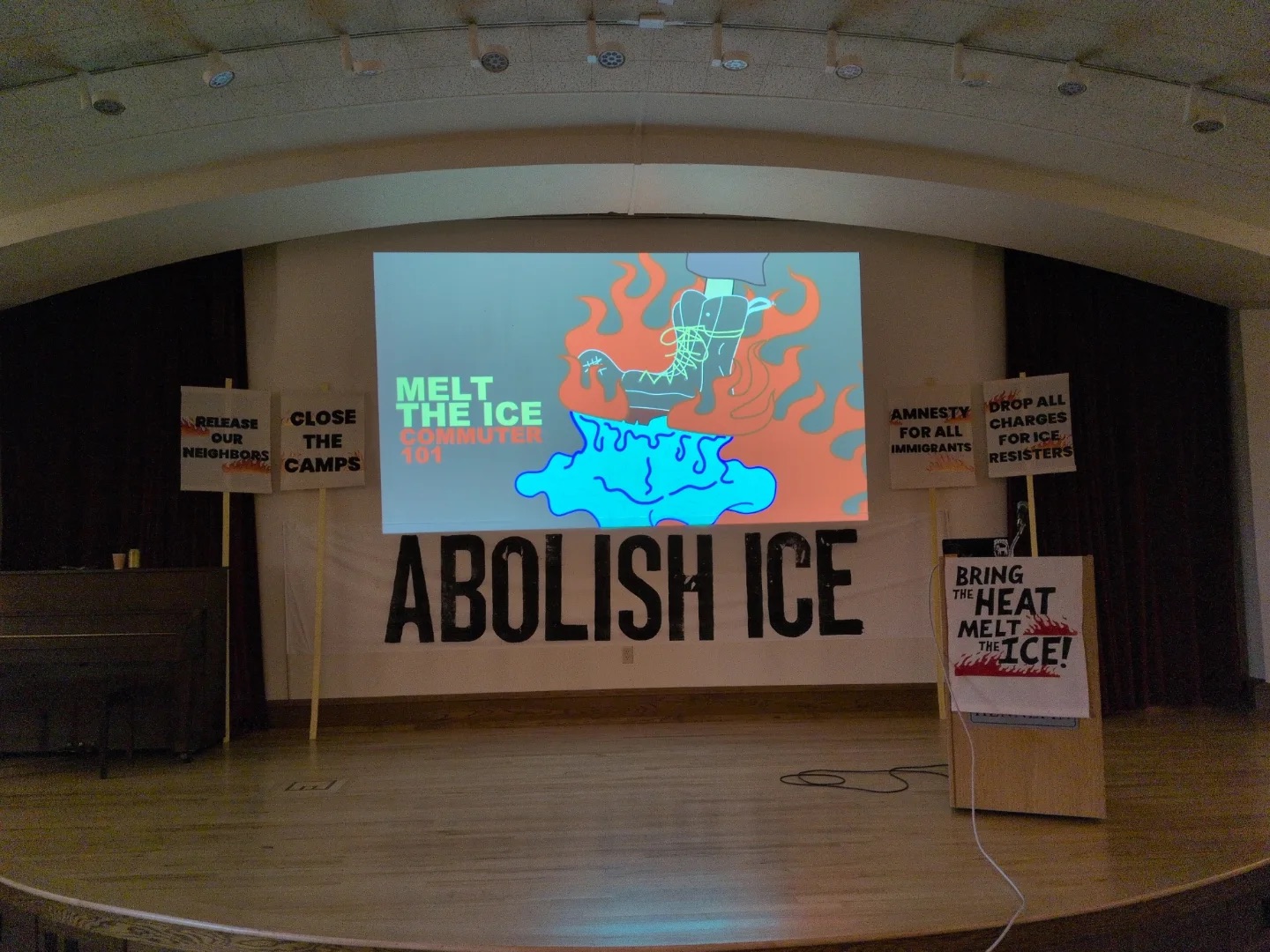
A meeting space on February 26, 2026.
The decline of Operation Metro Surge poses a question: what will become of these rapid response structures?
Alongside political education and patrolling, organizers hosted a variety of actions against ICE around the Twin Cities. In our wildest dreams, the week would have involved so much action around the cities that the police would have been unable to keep up with all of it. The goals were to pressure ICE and those that work with them, raise public consciousness about secondary targets (hotels, rental car companies, county jails that are holding ICE detainees) and take action against them, disrupt ICE’s operating logistics, and offer replicable avenues for a wide range of people and organizations to join in.
Our actions were hosted by a variety of organizations. Some actions were somewhat less confrontational, such as a rally at the State Capitol and an open mic at the Whipple Federal Building. On Friday, February 27, a “March against ICE Collaborators” snaked through downtown, stopping at various corporate targets—including Target’s corporate headquarters, Hilton, Enterprise, CBS News, and a construction firm called United Properties, not to mention the Hennepin County Jail. Marchers covered the streets with slogans in chalk, and ended by throwing snowballs at effigies of Mayor Jacob Frey and “Border Czar” Tom Homan.
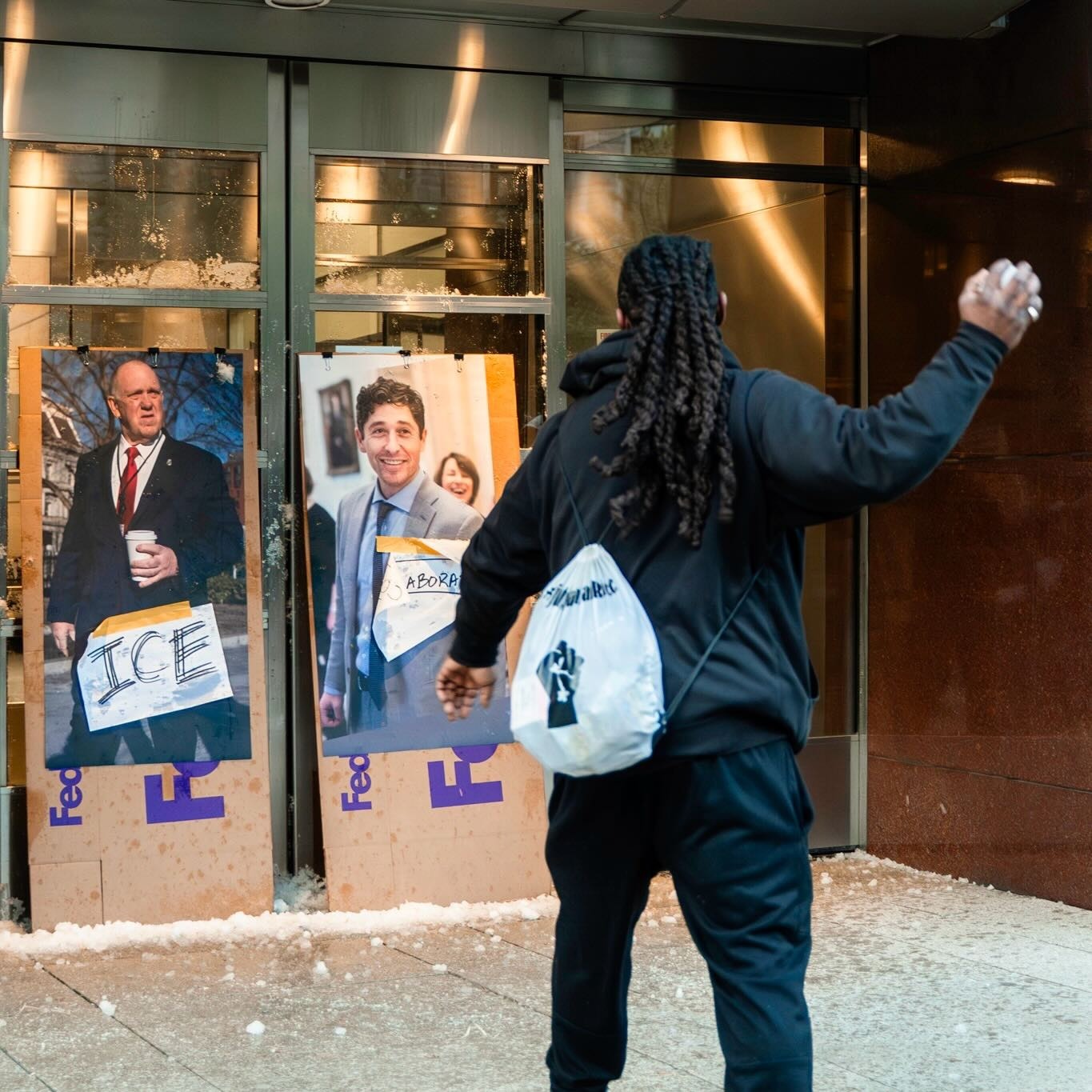
February 27, 2026.
Also on February 27, hundreds of local students hosted a walkout and sit-in at the State Capitol rotunda. The students were accompanied by the Kalpulli Yaocenoxtli dancers, a Mexica-Nahua group. That same day, several protesters were indicted on charges related to the alleged disruption of a church service at a church led by a pastor who worked with ICE. Upon learning of this through the rapid response channels, the students who walked out boarded their bus and drove straight from the Capitol to the federal courthouse.
February 27, 2026: march in the Twin Cities against ICE collaborators.
On Saturday, February 28, neighborhoods hosted block parties to build community, spend time together, and block ICE from their streets. A local childcare collective hosted a parade for kids and families. Affinity groups hosted autonomous nighttime noise demos at the hotels where ICE agents sleep. People at one of these demonstrations later went to certain DHS officials’ home addresses.
We invited many formal organizations to help organize these actions—Indigenous Roots, Sunrise Movement, Unidos, 50501, Democratic Socialists of America, Veterans for Peace, Black Cat Workers Collective, and more. While we remain critical of the non-profit industrial complex and progressive politics, all of these organizations agreed to the abolitionist line of abolishing ICE, the Department of Homeland Security, the police, and prisons. We aim to resist left sectarianism and work across party lines wherever we can. These organizations didn’t necessarily host the actions that we would have, but they collaborated with us in the coordinating committee meetings and they provided options for people to participate in a range of different kinds of activity.
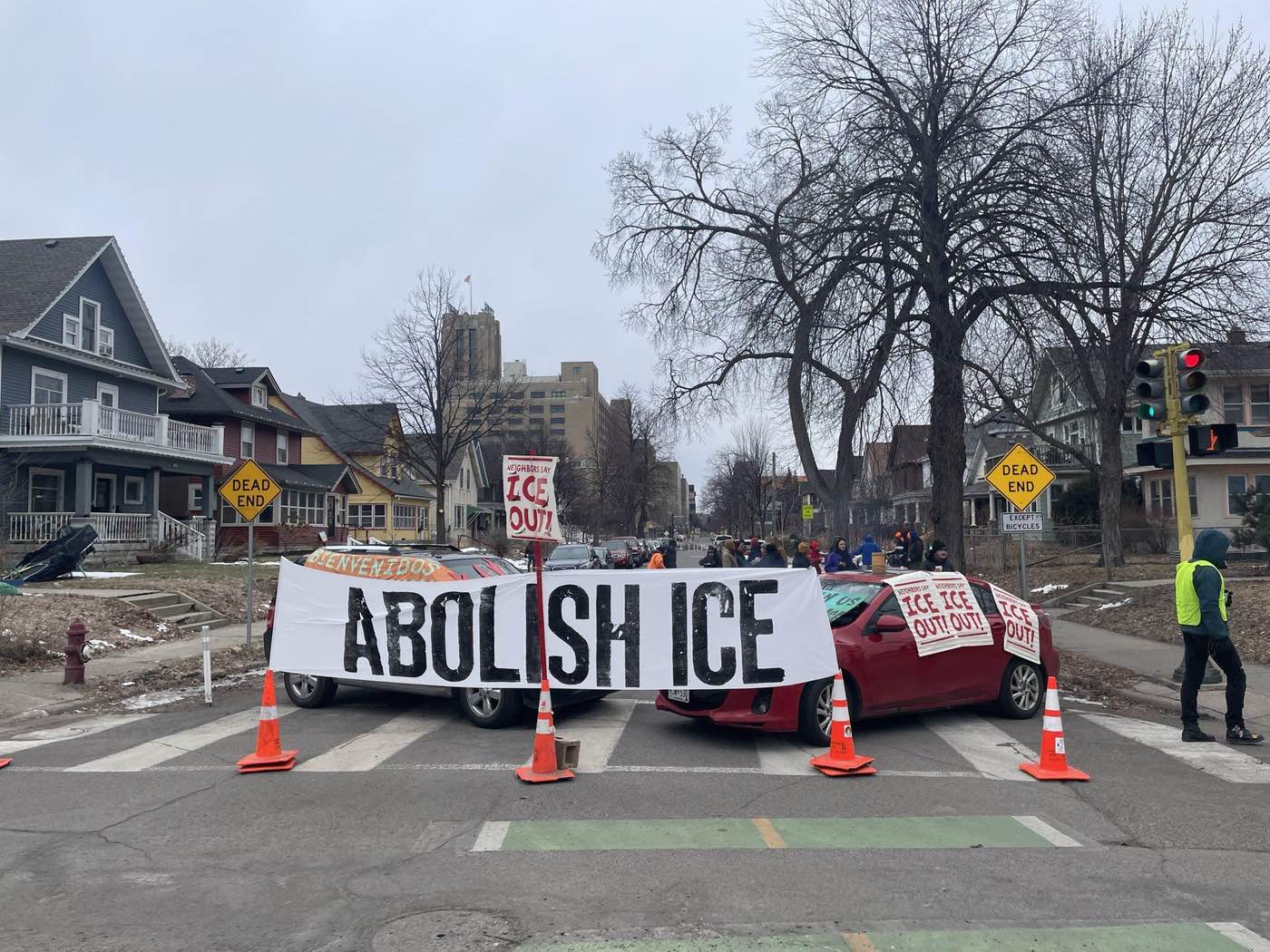
February 28, 2026.
Saturday also featured a demonstration at the Sherburne County Jail. In Minnesota, ICE has partnered with several county jails to imprison immigrant detainees. Sherburne currently imprisons many undocumented abductees, as well as prisoners of the 2020 George Floyd Uprising. We brought art and a speaker to the parking lot at the Sherburne, and a DJ blasted protest music. We danced to stay warm. We chanted “Fuck ICE” and “We love you,” hoping that our imprisoned sisters and brothers could hear us from inside. With hundreds more protesters, we might hope to eventually block the entrance and actually slow jail operations; for now, we remind our incarcerated relatives that we have not forgotten them.
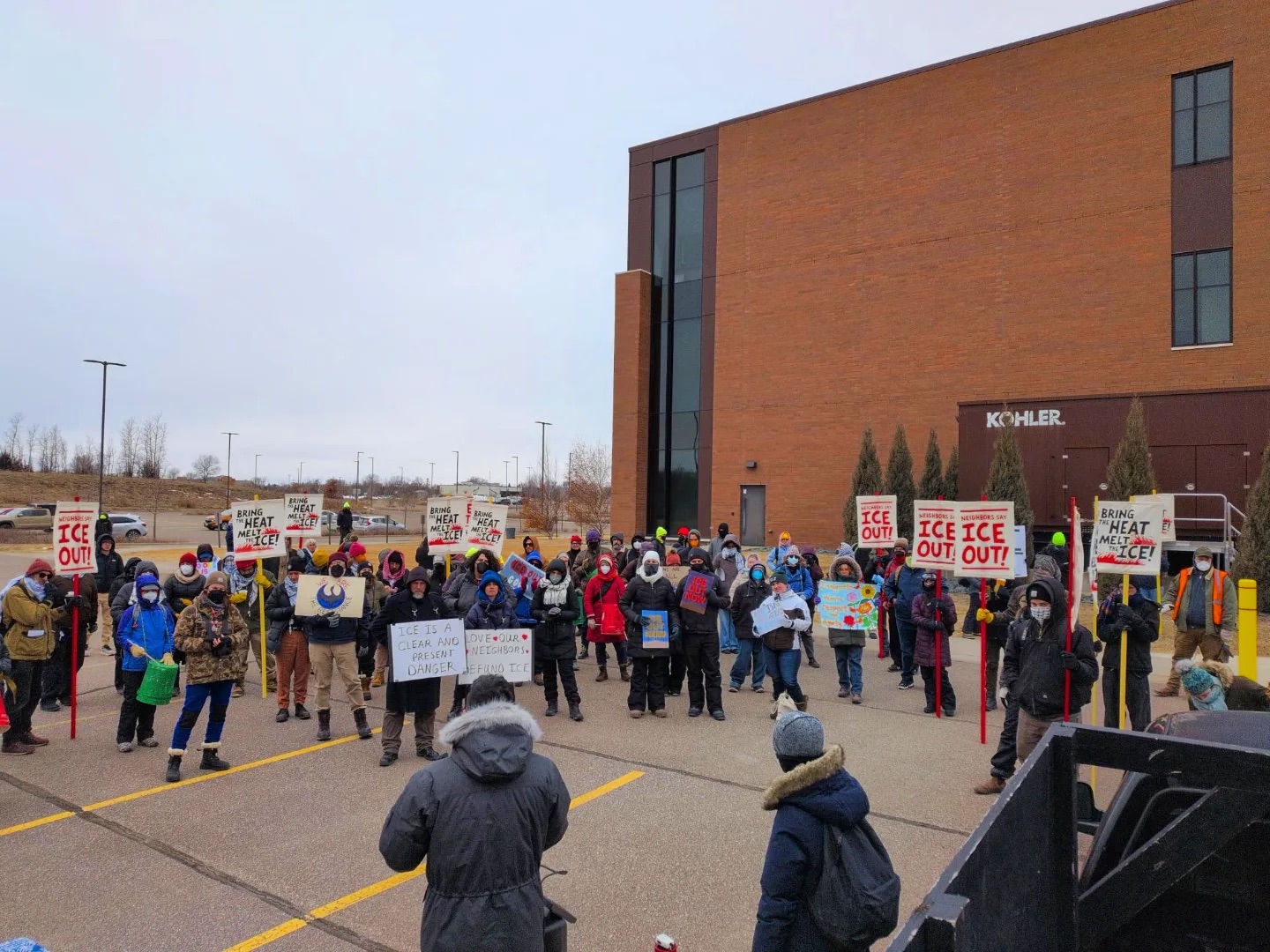
March on the Sherburne County Jail and ICE detention facility on February 28, 2026.
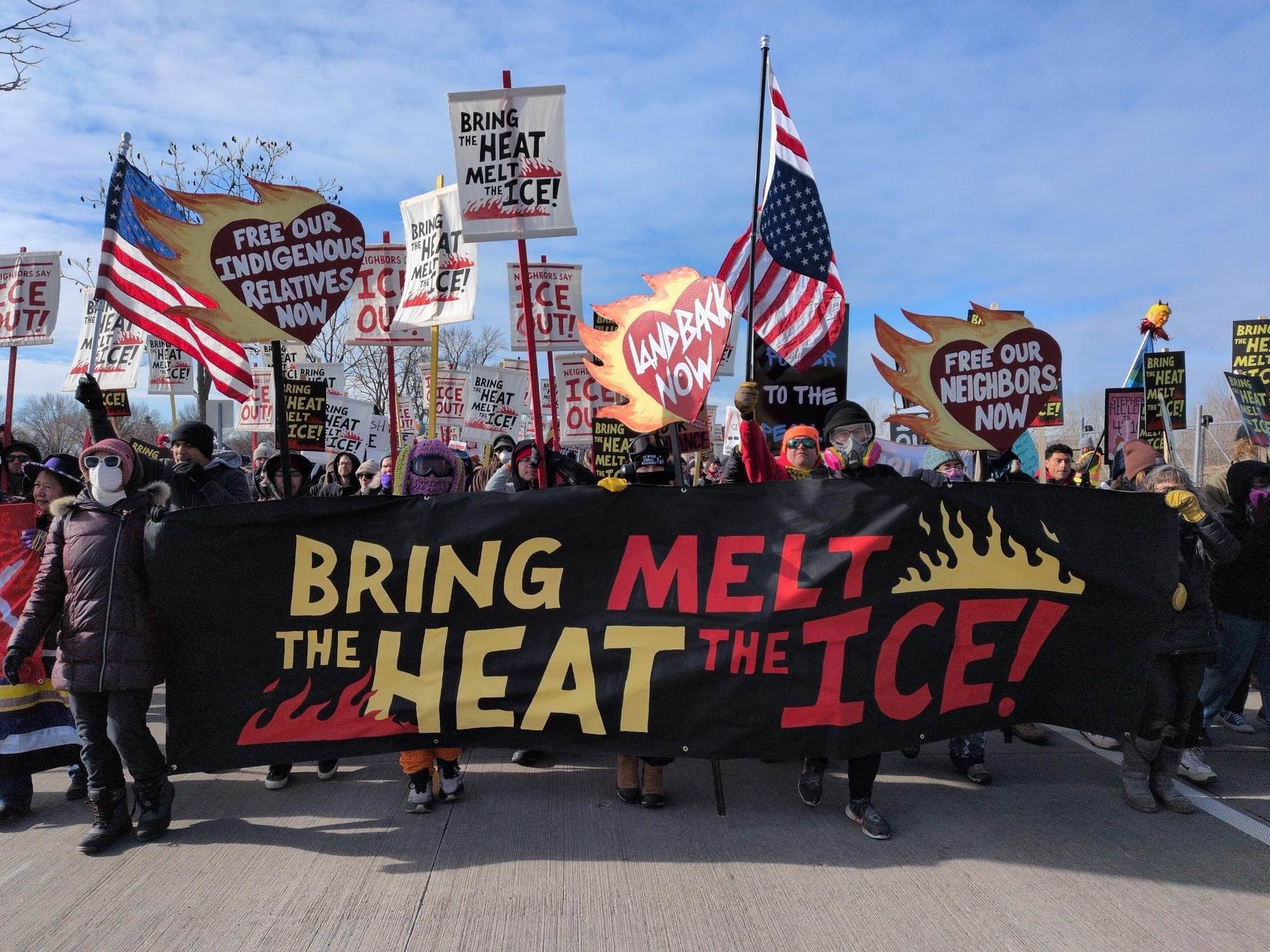
On Sunday, March 1, we marched to the Whipple Federal Building to demand freedom for our stolen neighbors and the return of stolen Indigenous lands. We marched through the streets just south of Whipple, and were pushed back by a line of riot cops from our attempt to block the south entrance. Dispersed interactions with sheriffs and conservation officers mounted into a standoff. In the midst of the standoff, the Kalpulli Yaocenoxtli arrived to dance and to pray. Officers then declared an unlawful assembly and surged into the so-called “protest zone,” arresting 29 people.
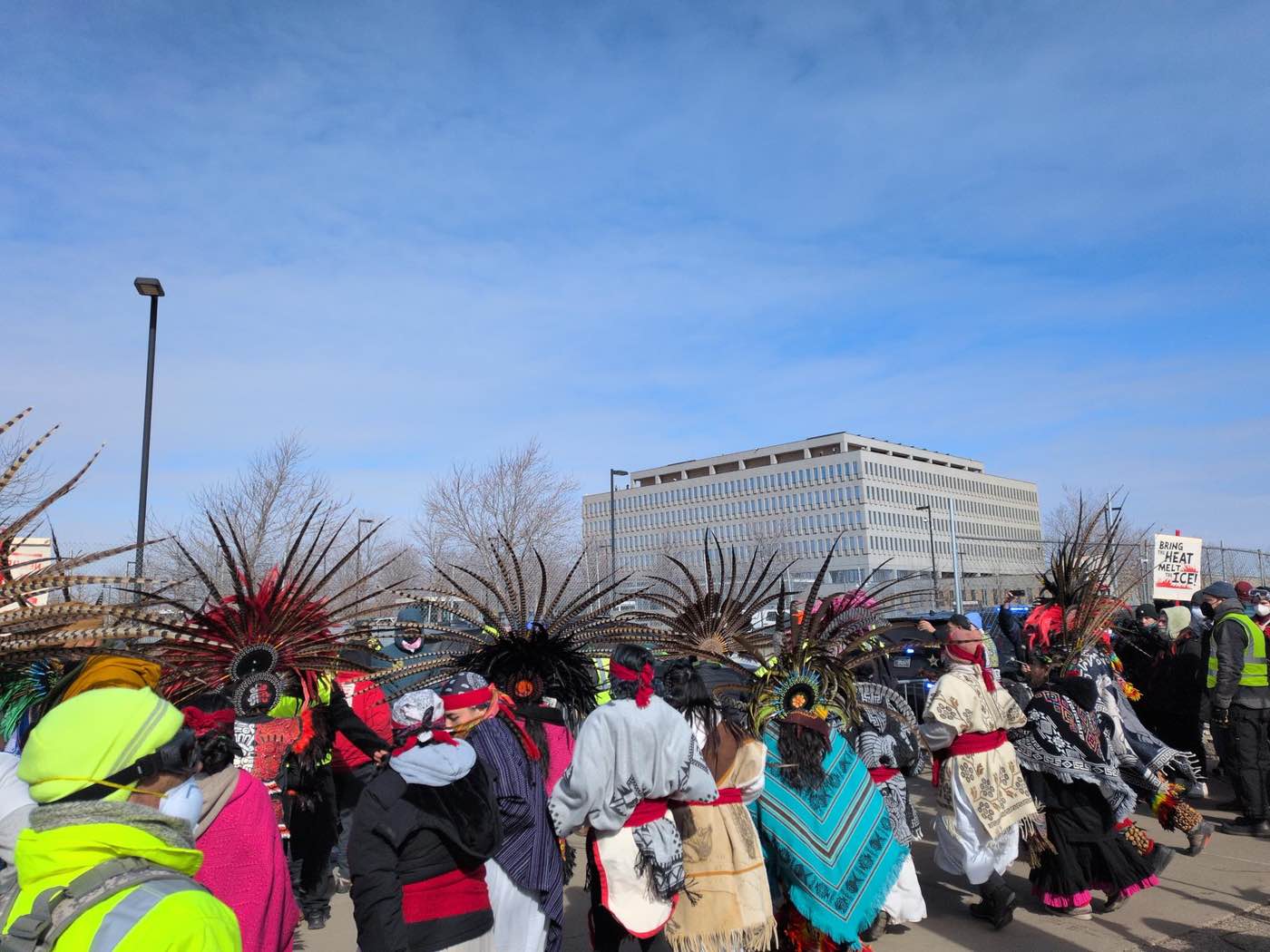
The Kalpulli Yaocenoxtli dancers on March 1, 2026.
At the same time as this march arrived at the southeast side of Whipple, a smaller autonomous action blockaded the road on the northwest side of the building with shields and reinforced banners. Sheriffs deployed chemical weapons and arrested 11 more people, for a total of 40 arrests that day. No ICE traffic went in or out of the building for more than two hours, even after the protests on both sides had dispersed.
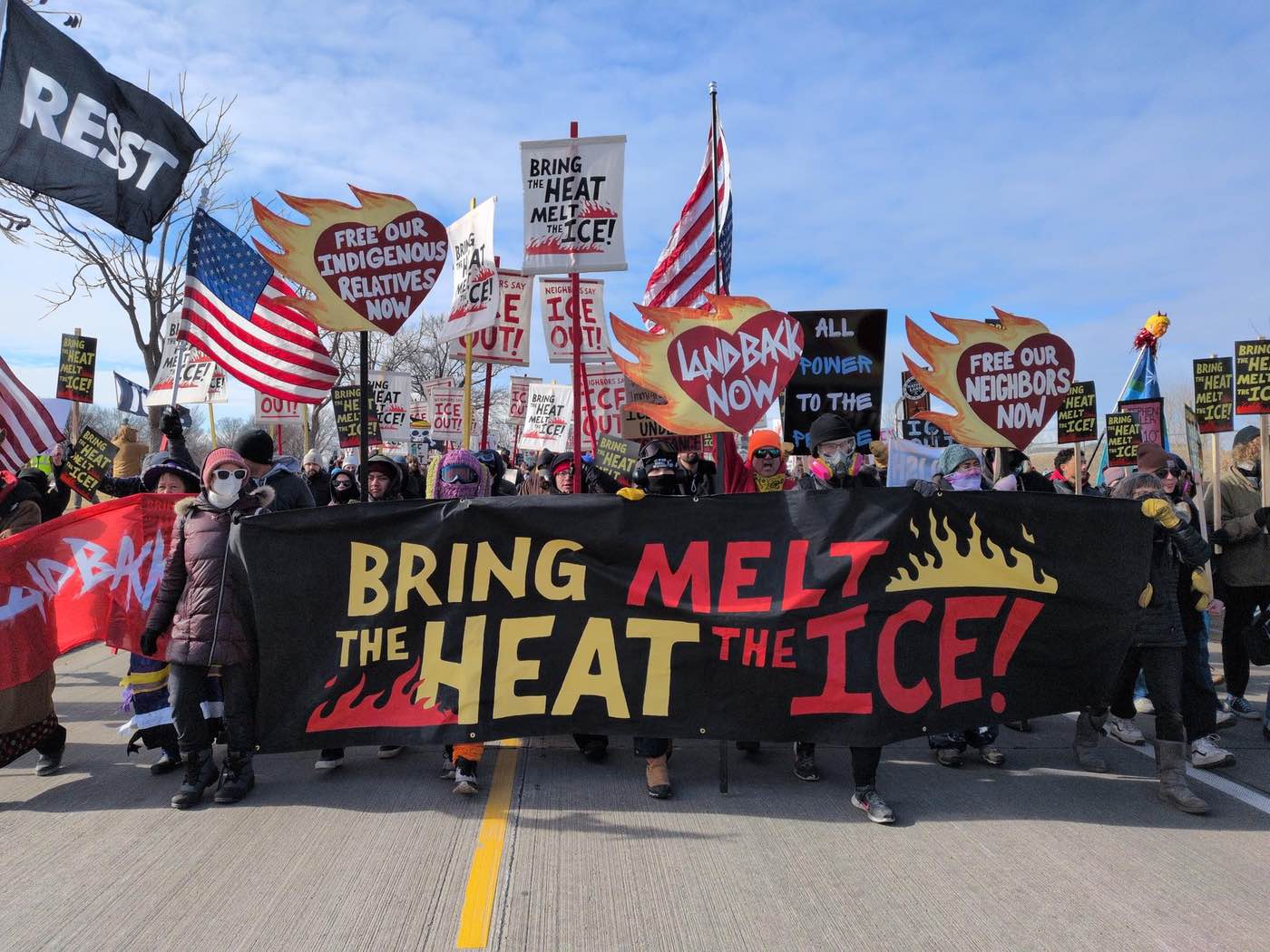
March 1, 2026.
Across the political education sessions, rapid response trainings, and protests, we could feel considerable exhaustion from local organizers. Turnout was lower from locals than we expected, an unsurprising outcome from a drained base. Nonetheless, in the course of the week, thousands of us took various forms of offensive action against ICE. We brought the heat to targets already facing pressure; we spotlighted corporations that we will continue to campaign against. We know that our organizing and action must continue nationwide.
You can help. You can disrupt primary and secondary ICE targets where you live, be they detention centers, Hiltons, Enterprises, Targets, or other corporations that assist ICE.
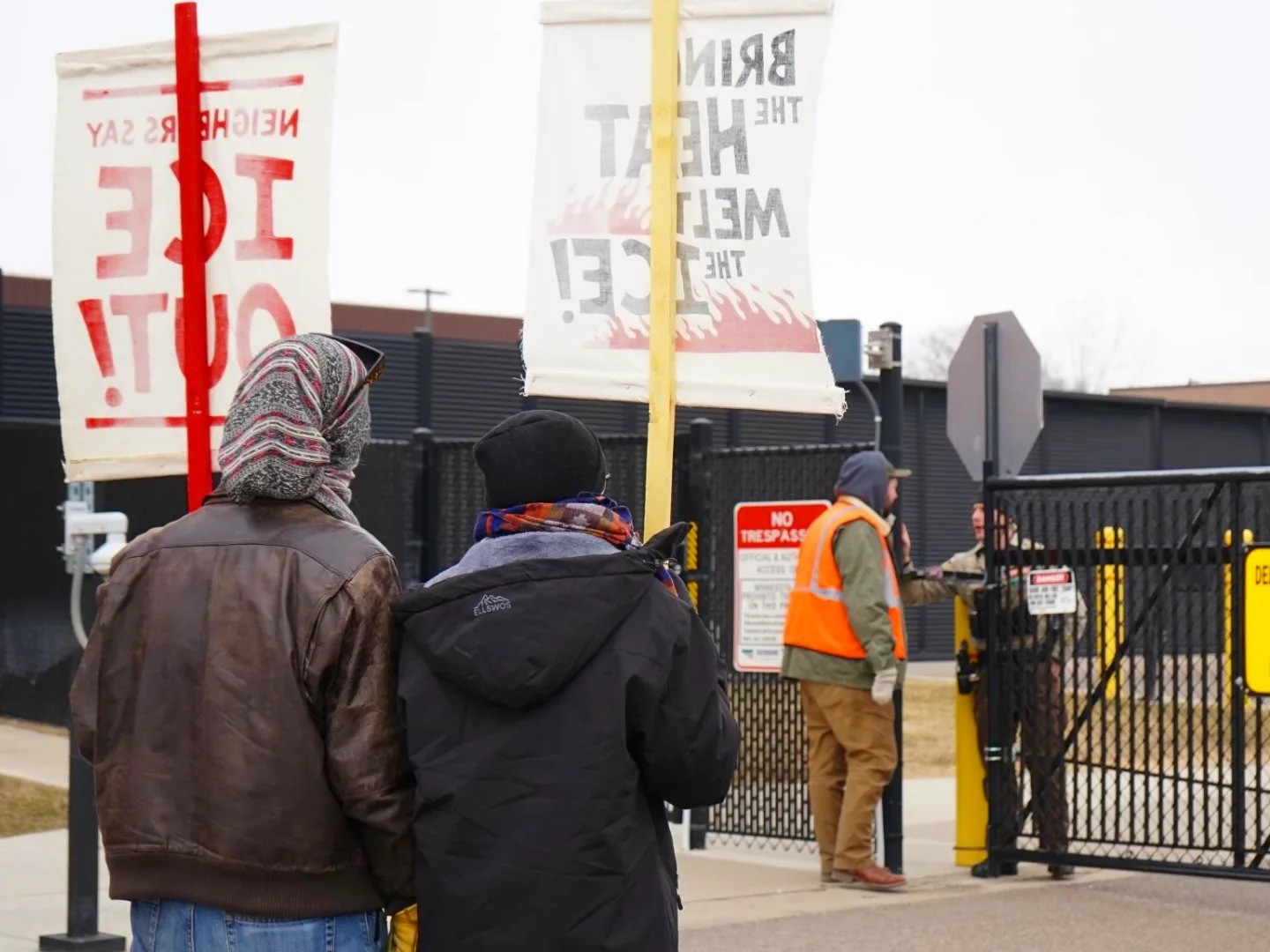
March on the Sherburne County Jail and ICE detention facility on February 28, 2026.
What did the week of action show about how we can build revolutionary struggle in this moment?
Our network contains many and varied approaches to revolutionary organizing. We seek to take what is best in each of these tendencies, fit them together, and attempt to address the contradictions that arise. The week of action was one attempt to address these contradictions. Many communist and anarchist groups that have throwing down here brought in their comrades from around the country.
In the Twin Cities context, one political tendency has deeper and broader roots in poor and working class communities than communists or anarchists: progressive nonprofits and labor unions. At their best, these organizations can provide a measure of political power for some of the most oppressed members of the working class. The major drawback is that they cannot withstand the inertia of the nonprofit-industrial complex, as they are beholden to their billionaire funders and to the limitations of the law. Consequently, they rarely overcome bureaucracy or engage in real militant resistance to the ruling class.
The Week of Action was one attempt to collaborate between the groups listed above—not out of long-term political alignment, but out of practical necessity. Creating a revolutionary movement will require coordinating across all these tendencies.
Another potent element of the week of action was multicultural celebration. To be able to overcome the US empire, we will need a resistance movement that is welcoming and irresistible in its appeal. Together, we ate Somali sambusas, danced to the Chicano music of Las Cafeteras, witnessed the power of the Indigenous Roots danza, participated in Dakota ceremonies, and ended the week with a rave. We don’t list these experiences to emphasize multiculturalism for its own sake, but to identify them as some of the most euphoric and important parts of the week of action.
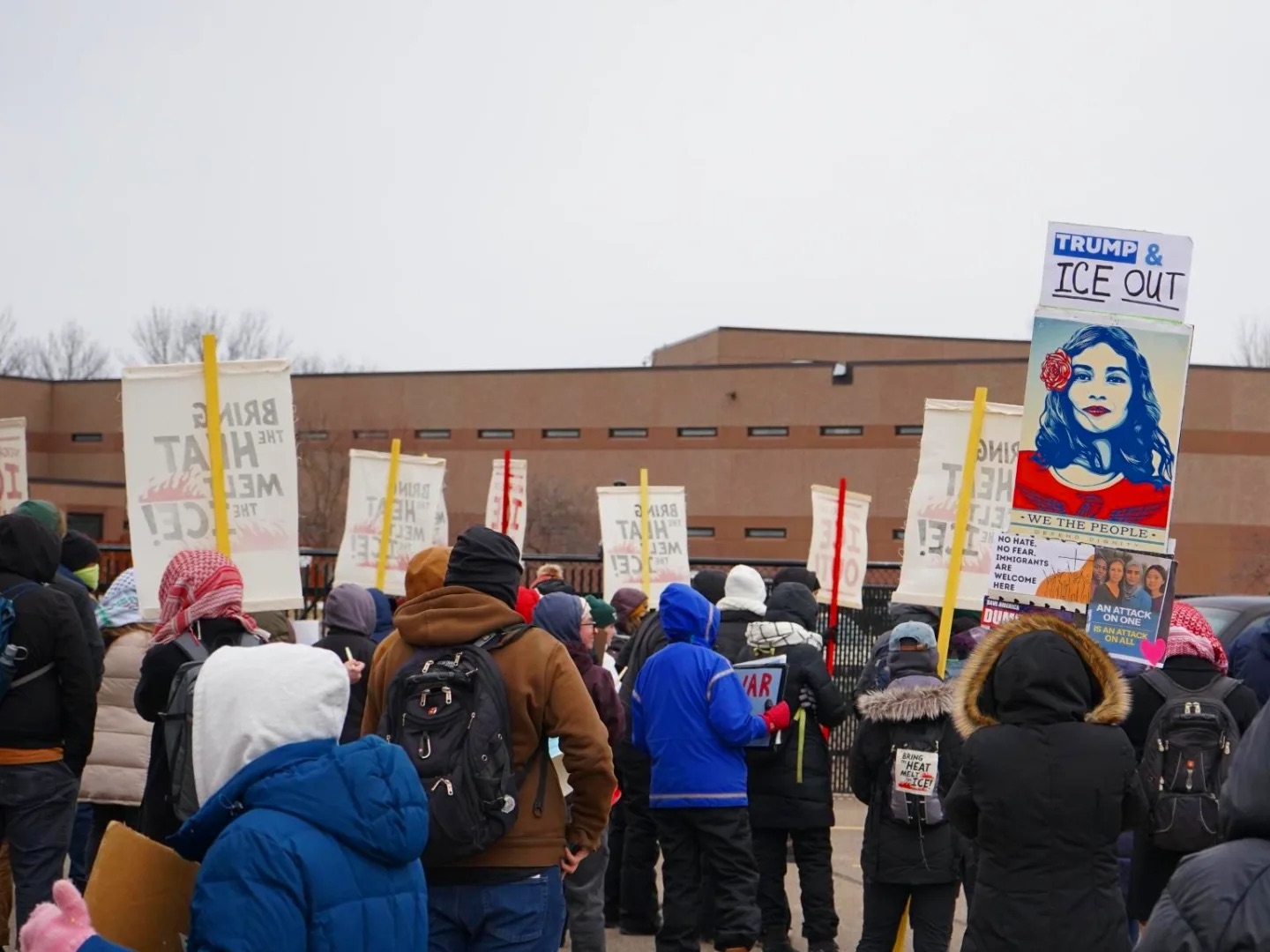
March on the Sherburne County Jail and ICE detention facility on February 28, 2026.
It is crucial to integrate deeply-rooted cultural practices into our resistance. Activists in the United States must learn from revolutionary comrades in the Global South. It’s not enough for white people just to march on behalf of their undocumented neighbors—we must build deep, long-lasting, and politicized relationships across cultural boundaries.
If everyone who has ever done a rapid response patrol signed on to the Twin Cities Tenants Union’s strike pledge, it would exceed its goal of 10,000 participants, and we could exert real leverage upon the ruling class. Likewise, if everyone who works alongside an immigrant was willing to march on the boss for them and with them, our movement would become more powerful.
We must sharpen our analysis of the moment alongside our neighbors and coworkers. One means of achieving this is to continue to hold regular political education sessions at which to learn about and reflect on what the people of Minnesota have accomplished over the last three months and what we can accomplish together in the future. Without intentional, communal reflection, we may not be able to grow.
Operation Metro Surge is ongoing. In fact, we’ve seen an uptick in ICE activity in the days since the week of action. As federal agents shift towards more covert methods, the resistance must continue to adapt and grow. We would like to extend gratitude to everyone who contributed to the week of action and everyone who participated. We invite critique while celebrating the will, skill, and determination that brought us together.
In the great people’s uprising against ICE, the Week of Action was just one small part. Every great historical movement is comprised of a thousand small parts.
All power to the people.
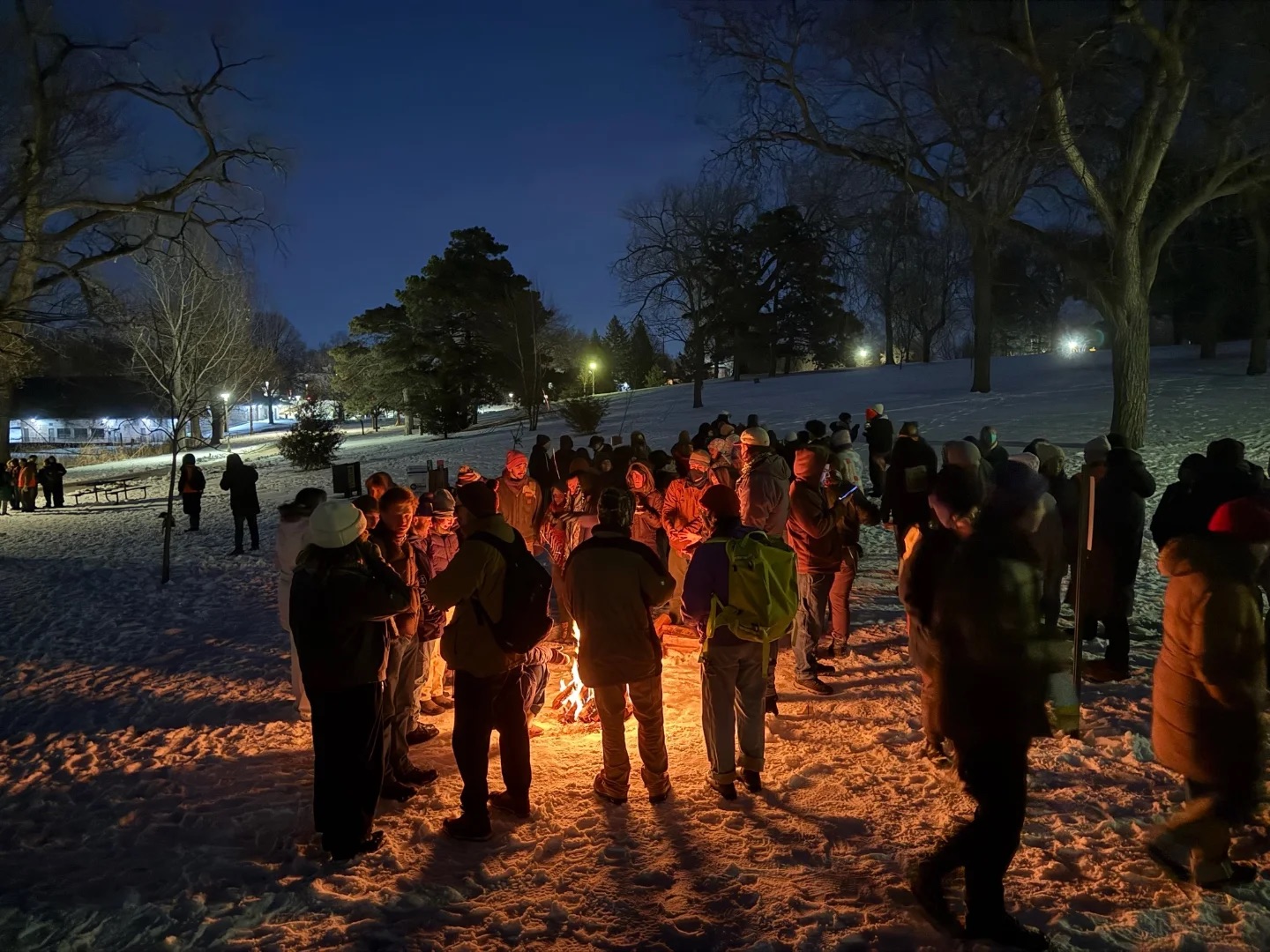
February 26, 2026.
Further Reading
- Melt the ICE—The Fight Continues: Twin Cities Protesters Blockade ICE Inside the Federal Building
- They Escalate, We Escalate: A Short History of the Fight against ICE in the Twin Cities
- Filter Blockades: A Tactic from the Twin Cities to Fight ICE and Defend Your Neighborhood
- The Noise Demonstrations Keeping ICE Agents Awake at Their Hotels—A Model from the Twin Cities
- Minneapolis Responds to the Murder of Alex Pretti: An Eyewitness Account
- Protesters Blockade ICE Headquarters in Fort Snelling, Minnesota: A Report from an Action during the General Strike in the Twin Cities
- From Rapid Response to Revolutionary Social Change: The Potential of the Rapid Response Networks
- Rapid Response Networks in the Twin Cities: A Guide to an Updated Model
- North Minneapolis Chases Out ICE: A Firsthand Account of the Response to Another ICE Shooting
- Minneapolis Responds to ICE Committing Murder: An Account from the Streets
- Protesters Clash with ICE Agents Again in the Twin Cities: A Firsthand Report
- Minneapolis to Feds: “Get the Fuck Out”—How People in the Twin Cities Responded to a Federal Raid